

“So Far, So Good,” CHED-HEDF Says After DOrSU Project Monitoring
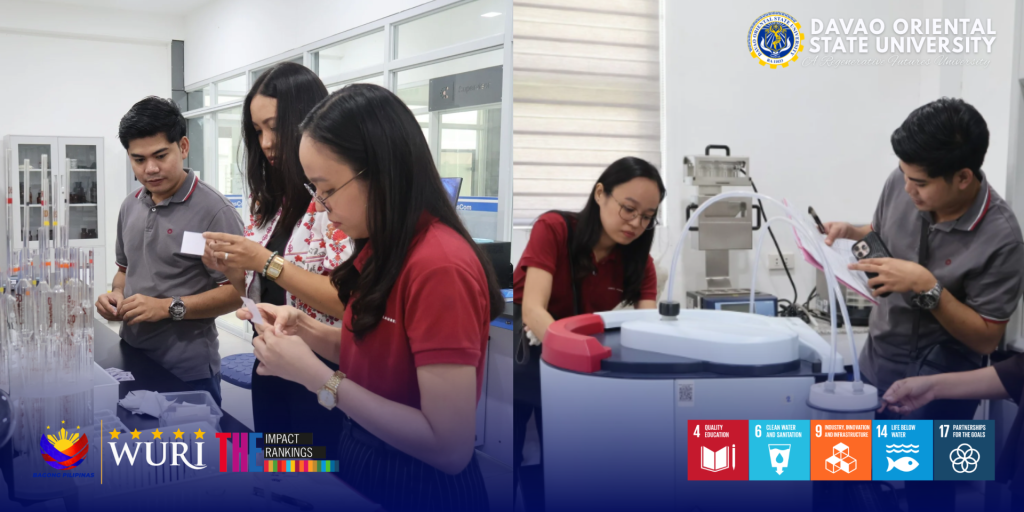
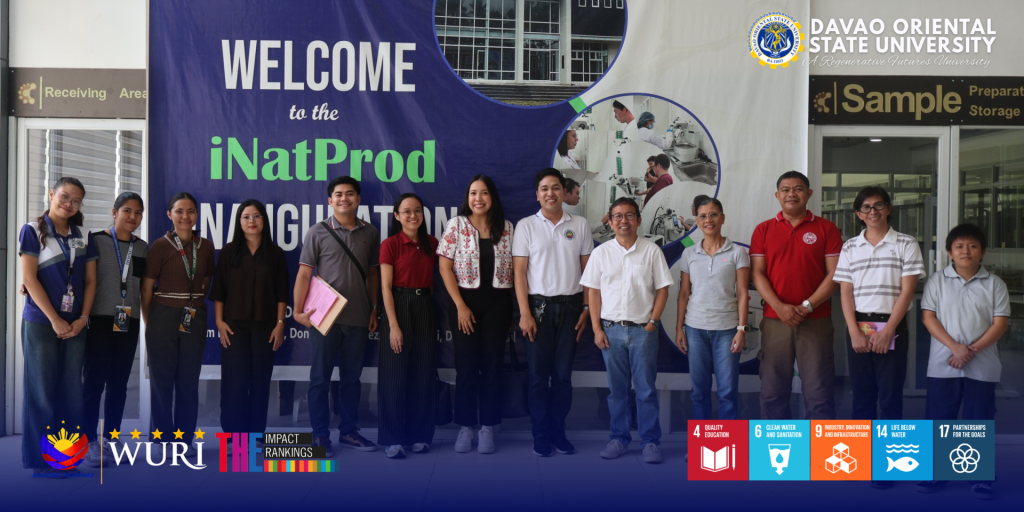
“So far, so good,” said Jamie Joyce C. Sese, Project Development Officer of the Commission on Higher Education (CHED) and a member of the CHED–Higher Education Development Fund (HEDF) monitoring team, as the delegation assessed the implementation and utilization of Davao Oriental State University’s (DOrSU) nearly ₱15-million infrastructure project on September 30.
The monitoring covered the HEDF-funded project “Establishing State-of-the-Art Water and Soil Laboratories: Social Responsibilities through Research,” through which DOrSU acquired laboratory equipment, furniture, and fixtures worth ₱14,942,473.44.
Joining Sese in the monitoring team were Maria Bianca G. Villanueva and Michael Joshua Maniquis of the CHED Central Office, and Dr. Leomar Jay Oblianda of CHED Regional Office XI (CHEDRO XI).
The team inspected and tagged equipment acquired under the project, including a rotary evaporator, UV-Vis spectrophotometer, biosafety cabinet, fume hood, and laboratory workstations. The visit further assessed how these resources have been used for instruction, research, and community-oriented initiatives.
DOrSU also presented how the facilities have been used since their acquisition, citing student research activities, faculty-led studies, research publications, conference participation, and laboratory use during Academic Year 2025–2026.
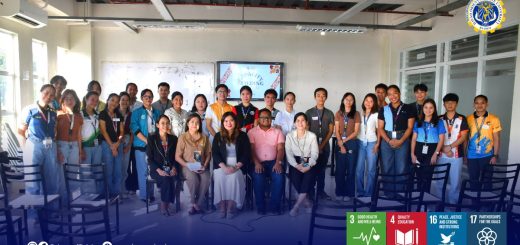
A focus group discussion gathered feedback on the project’s benefits to students, researchers, faculty members, and the community. DOrSU student Niña Lumapas joined alumni now serving as university personnel—Desiree Joy D. Maxey, Eliza Dave U. Bakiao, Mykha B. Pandalili, and Kurt Rasheed Elino—along with LGU representative Mark Lawani.
The monitoring team also met with University President Dr. Roy G. Ponce to discuss the project’s accomplishments, continuing utilization, and plans for sustaining the laboratory facilities. Dr. Ponce said the HEDF support has strengthened DOrSU’s research capability and enabled the University to level up research studies.
As part of the visit, the delegation toured the DOrSU Artificial Coral Reef Production Facility, where it observed the production of 3D-printed clay artificial reefs—one of the University’s research initiatives applying science and innovation to environmental concerns.
The monitoring visit gave CHED-HEDF a closer look at how its investment has translated into research facilities now being used by DOrSU students and faculty for academic work, scientific inquiry, and studies addressing local needs.