


New beetle species discovered in Mindanao named in honor of Sen. Pia Cayetano

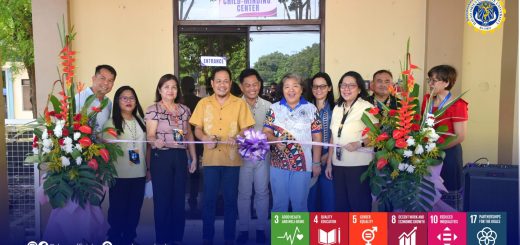
A new beetle species discovered in the high-elevation forests of the Eastern Mindanao Biodiversity Corridor has been named in honor of Senator Pilar Juliana “Pia” S. Cayetano, a leading advocate of futures thinking in the country whose funding support helped establish DOrSU’s Center for Futures Thinking and Regenerative Development (CFTRD) and provide seed grants for research, innovation, and extension initiatives, including the coleopterological expedition that led to the species’ discovery.
The paper, titled “Catalog of the genus Faustabryna Breuning, 1961 (Coleoptera: Cerambycidae) in the Philippines with description of a new species from Eastern Mindanao Biodiversity Corridor,” was published in the international taxonomic journal Zootaxa (5869 (1):139–149).
The study was authored by Lourenz Kate I. Dagpin, Daven Jayson D. Agbas, Graden G. Obrial, Jhonnel P. Villegas, Mark Aljen D. Binocal, and Milton Norman D. Medina, a collaborative team from DOrSU’s Tropical Genomics and Invertebrate Research Laboratory–University Research Complex (URESCOM) and Center for Futures Thinking and Regenerative Development (CFTRD).
The researchers introduced Faustabryna piacayetanoae Medina & Dagpin, sp. nov., a longhorn beetle discovered in the high-elevation forests of the Eastern Mindanao Biodiversity Corridor. The new species is the eighth known species of the genus Faustabryna and a new endemic species in the Philippines.
Specimens of the species were collected from the Mt. Candalaga Range in Maragusan, Davao de Oro, at elevations of about 1,500 to 1,700 meters above sea level. The mountain forms part of the Eastern Mindanao Biodiversity Corridor, an ecologically important landscape known for its mountain ecosystems and endemic wildlife and which has yielded several beetle species new to science in recent years.
The study expands available scientific information on the genus Faustabryna in the Philippines, providing an updated catalog, ecological notes, and detailed images of the newly described species. Such records are particularly important as Mt. Candalaga faces pressures from road development, mining, agricultural expansion, deforestation, and emerging tourism activities.
With much of the mountain range still unsurveyed, the researchers noted considerable potential for further species discoveries and underscored the need for continued field studies and stronger research support. They also called for comprehensive environmental management to help conserve Mt. Candalaga’s remaining forest ecosystems and protect endemic species that depend on them.
With the continuing support of Senator Cayetano, the CFTRD remains one of DOrSU’s key platforms for translating the University’s regenerative futures vision into concrete research, innovation, and extension (RIE) initiatives—supporting studies and programs that generate new knowledge, respond to environmental and societal challenges, and create long-term value for communities and ecosystems.