


Guest Speaker Pusta urges DOrSU NSTP completers to choose service beyond titles, recognition

Volunteerism does not begin in large public gestures. It begins in the quiet decision to help when help is needed.
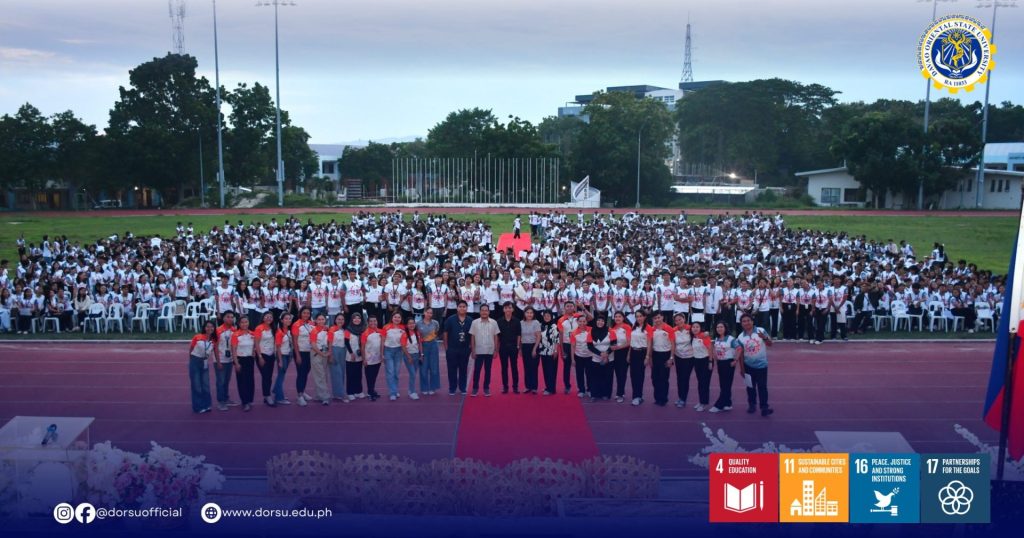
This was the message underscored by Guest Speaker Reginrex Pusta during the National Service Training Program (NSTP) Completion Ceremony of Davao Oriental State University (DOrSU) Main Campus held on June 2, 2026, at the University Grounds, DOrSU Main Campus, City of Mati.
Speaking on the theme “Empowering the Youth Towards Responsive Community Service and Nation-Building,” Pusta challenged the completers to see service not as a requirement to be completed, but as a discipline to be carried into their homes, organizations, and communities.
He traced his own leadership journey to the pandemic years, when classes were held online and students were still adjusting to an unfamiliar learning environment. Before holding any formal position, Pusta said he found himself helping classmates organize tasks, meet deadlines, and navigate academic responsibilities.
There was no title attached to it, he recalled. No certificate. No allowance. Only the need to help.
From those simple beginnings, he later became involved in student organizations and served as Business Manager of the University Student Council, Vice President of the Society of Mathematics Majors, and Circulations Officer of The Catalyst. But even with these roles, Pusta said leadership remained rooted in service rather than status.
“Leadership is about being dependable. It is about showing up when people need you. It is about choosing responsibility even when nobody is watching,” he told the completers.
Pusta said many people associate leadership with influence, recognition, or authority, but its more difficult and less visible side is found in patience, accountability, humility, resilience, and the willingness to serve despite fatigue, pressure, and uncertainty.
He also reminded the completers that motivation alone is not enough to sustain service. Discipline, he said, is what allows people to continue working even when circumstances become difficult.
“Discipline continues when motivation is absent,” he said. “Discipline transforms ordinary efforts into meaningful results.”
In urging the completers to embrace volunteerism, Pusta said young people need not wait for titles or positions before contributing to their communities. Meaningful change, he stressed, often begins with small acts— a willingness to volunteer, a simple act of kindness, or the decision to help without expecting anything in return.
He also called on them to become “regenerative leaders,” or individuals who create impact that continues beyond their own time.
“Plant seeds that others can grow. Share knowledge that others can use. Create opportunities that others can benefit from. Leave every organization, every community, every situation better than you found it,” he said.
University President Dr. Roy G. Ponce, in his message, also underscored that the NSTP experience should translate into practical service. He reminded the completers of the values of volunteerism, readiness, security, and safety.
Dr. Ponce said service begins at home, in helping with household responsibilities, preparing for emergencies, joining disaster preparedness trainings, checking safety measures, and taking responsibility for the welfare of one’s family and community.
“Your volunteerism is not just a requirement completed; it is a foundation laid for a stronger, more compassionate, more resilient Philippines,” he said.
A total of 1,502 National Service Training Program completers from DOrSU Main Campus participated in the NSTP Completion Ceremony. The program featured the presentation and confirmation of completers from the Civic Welfare Training Service (CWTS), Literacy Training Service (LTS), and Reserve Officers’ Training Corps (ROTC), as well as the turnover of NSTP graduates to the National Service Reserve Corps (NSRC), the administration of the NSRC Oath of Honor and Responsibility, and the distribution of certificates, awards, and medals.
More than a culmination of a course requirement, the event served as a reminder for the completers to bring the spirit of NSTP into everyday life where service is not always announced, rewarded, or seen, but where it matters most.