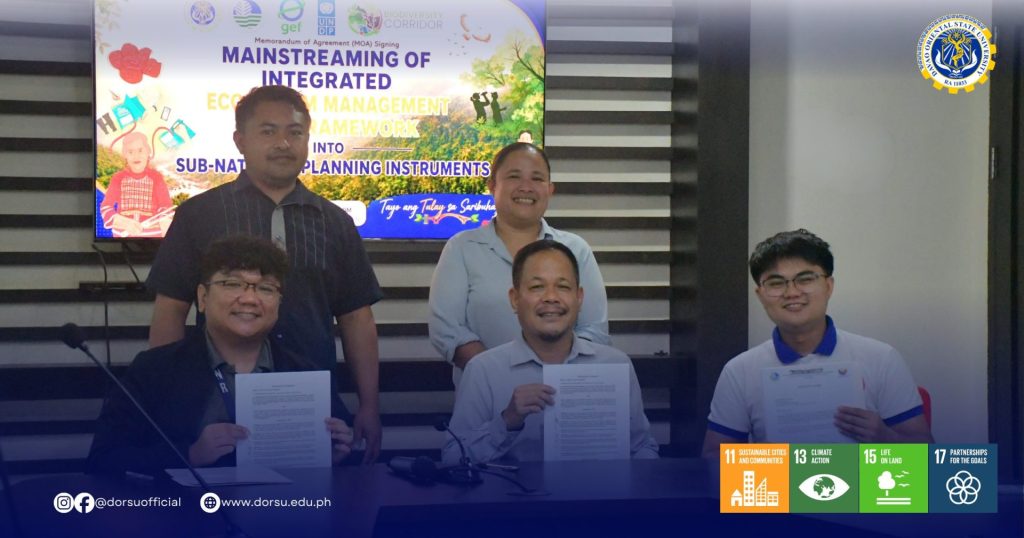
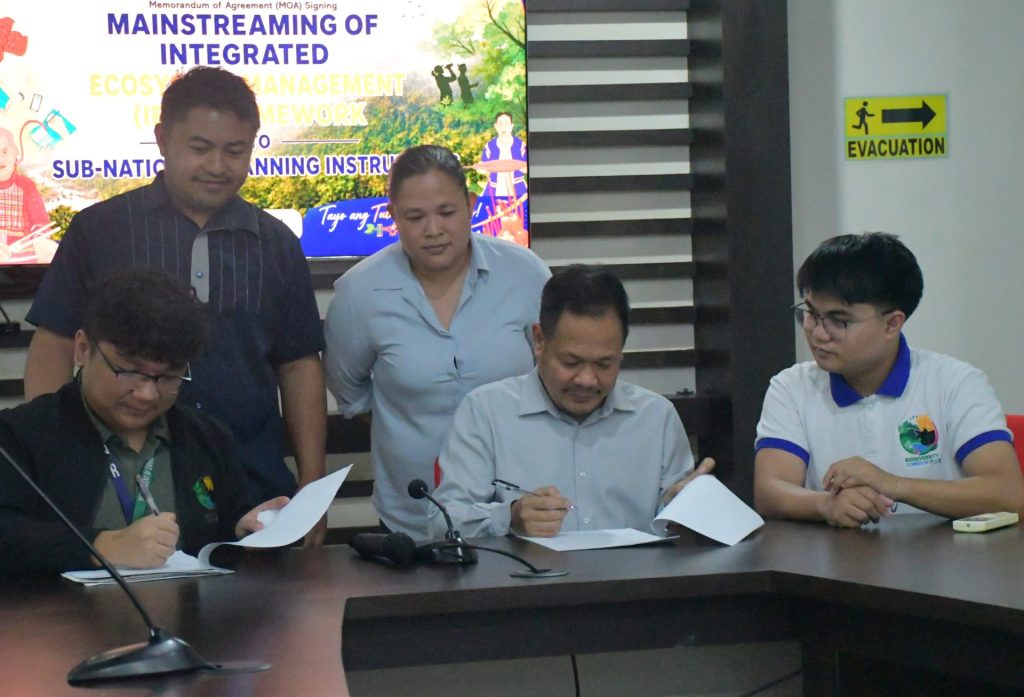
Davao Oriental State University signed a ₱12-million Memorandum of Agreement with the Department of Environment and Natural Resources–Regional Office XIII for a project that will integrate biodiversity conservation and ecosystem management into regional, provincial, and local development plans.
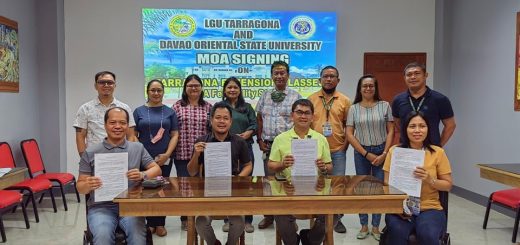
DOrSU President Dr. Roy G. Ponce signed the agreement during a courtesy meeting with DENR Caraga representatives on June 17, 2026, at the DOrSU Main Campus in the City of Mati.
The project will be led by Amy G. Ponce, DOrSU faculty member and Director of the Regional Integrated Coastal Resource Management XI.
The agreement forms part of the “Integrated Approach in the Management of Major Biodiversity Corridors in the Philippines” project, implemented by DENR with funding from the Global Environment Facility and support from the United Nations Development Programme.
Under the agreement, DOrSU will provide technical assistance in incorporating the Integrated Ecosystem Management framework into subnational planning instruments within the Eastern Mindanao Biodiversity Corridor. The University will work with regional agencies, provincial governments, and local government units to ensure that biodiversity conservation, ecological connectivity, sustainable land use, and natural resource management are considered in development planning and decision-making.
The project also includes capacity-building activities for planners and local government personnel, as well as the preparation of strategies and planning tools to guide participating offices in integrating biodiversity concerns into their programs and policies.
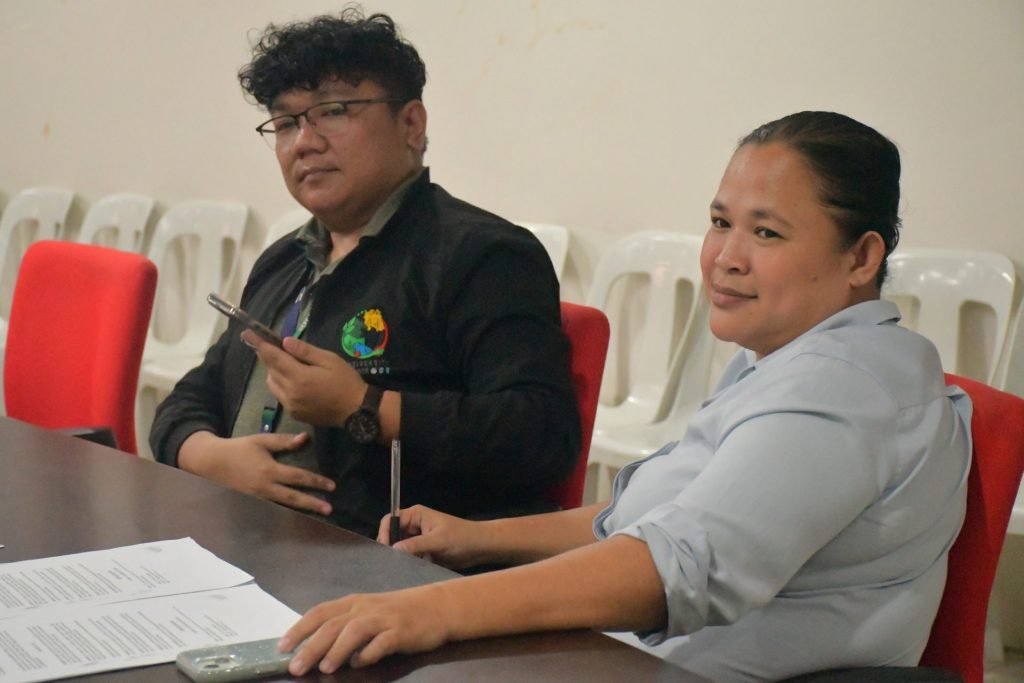
Present from DENR Caraga during the meeting were Carl Van E. Lucero, Stakeholders Engagement Officer, and Ryan Jay G. Labiao, EnP, Regional Landscape and Planning Officer.
Through the partnership, DOrSU will apply its research and technical expertise to the planning process to help ensure that development priorities within the corridor account for the protection, sustainable use, and long-term management of biodiversity and natural resources.