


DOrSU Board greenlights Lupon external classes, tackles other university priorities in first quarter meeting

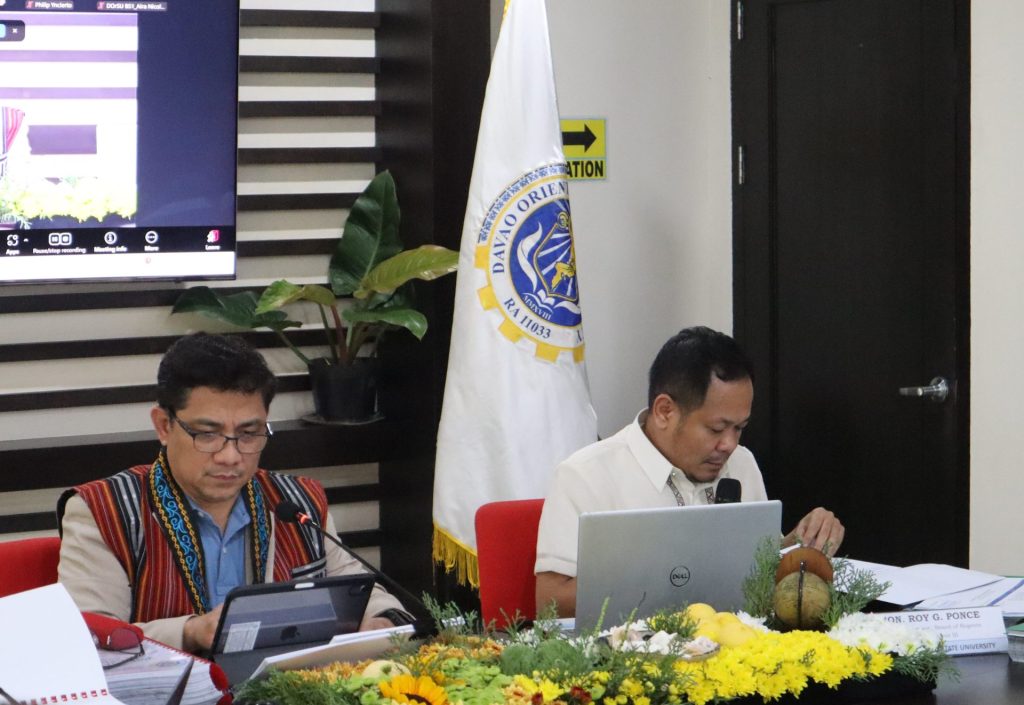
The Davao Oriental State University (DOrSU) Board of Regents approved the establishment of Lupon external classes, subject to CHED compliance, and took up other key university priorities during its First Quarter Meeting on March 6, 2026, at the DOrSU Board Room, presided over by CHED Commissioner and DOrSU BOR Chair Hon. Desiderio R. Apag III.
Joining the discussion online as resource persons on the proposed Lupon external classes were Lupon Mayor Santos “Sonny” Q. Alonzo, Jr., and Municipal Vice Mayor Christian Lawrence C. Go, who both conveyed the LGU’s support.
Alongside the approval of the Lupon external classes, the Board also deliberated on and approved matters involving curricular revisions, appointments, and agreements, as part of the University’s continuing efforts to strengthen its academic programs, institutional operations, and strategic partnerships. Other agenda items related to the University’s broader priorities, including concerns in governance, research, innovation, and extension, were also discussed during the meeting.
As part of the Board’s visit, University President Dr. Roy G. Ponce toured members who attended in person around the campus, showcasing DOrSU’s state-of-the-art facilities and laboratories, including the Artificial Coral Reef Production Facility and the University Research Complex.
Among those in attendance were Hon. Genelyn C. Lim, Faculty Regent; Hon. Naxes Jee T. Cablinda, Student Regent; Hon. Ervincarlo A. Alcano, Private Sector Representative; Atty. Maria Consuelo T. Palma Gil-Roflo, representing Hon. Loren Legarda, Senator and Chair of the Senate Committee on Higher, Technical and Vocational Education; and Hon. Priscilla R. Sonido, Regional Director of DEPDev–RO XI. Also joining the meeting online was Hon. Anthony C. Sales, Regional Director of DOST–RO XI.
The successful conduct of the First Quarter Board of Regents Meeting reflects DOrSU’s continuing commitment to responsive governance and strategic decision-making in advancing the University’s mandate in instruction, research, innovation, extension, and institutional development.