

𝗗𝗢𝗿𝗦𝗨, 𝙆𝙖𝙗𝙪𝙗𝙖𝙮𝙖𝙣 𝙤𝙛 𝙎𝙖𝙣𝙜𝙖𝙗 𝘀𝗲𝗮𝗹 𝗽𝗮𝗿𝘁𝗻𝗲𝗿𝘀𝗵𝗶𝗽 𝘁𝗼 𝗽𝗿𝗲𝘀𝗲𝗿𝘃𝗲 𝗠𝗮𝗻𝗱𝗮𝘆𝗮 𝗮𝗿𝘁𝘀, 𝘀𝘂𝗽𝗽𝗼𝗿𝘁 𝗹𝗶𝘃𝗲𝗹𝗶𝗵𝗼𝗼𝗱
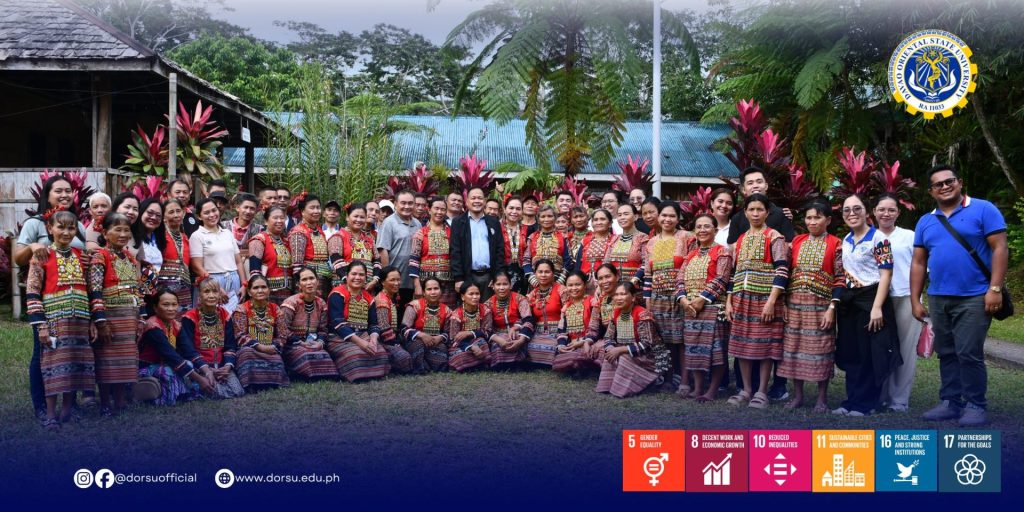
Davao Oriental State University (DOrSU) has entered into a two-year partnership with the Kabubayan of Sangab Association (KSA) to help preserve traditional Mandaya embroidery and beadwork while strengthening livelihood opportunities for Indigenous women in Sitio Sangab, Barangay Pichon, Caraga, Davao Oriental.
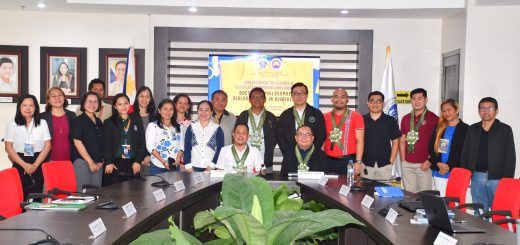
The agreement, signed on August 11 by DOrSU President Dr. Roy G. Ponce and KSA President Nita B. Quizon, covers the implementation of “Paglaugtabing: Regenerative Creative Works for the Preservation and Promotion of Mandaya Tangible Arts and Crafts.”
The project brings together pagtabing, the traditional Mandaya practice of embroidery, and paglaug, or Mandaya beadwork, as both living expressions of cultural identity and possible sources of sustainable livelihood for women in the community.
Under the partnership, DOrSU will provide materials, tools, technical assistance, and capacity-building support for at least 15 Indigenous women beneficiaries. The University will also assist in product development, packaging, promotion, marketing, organizational strengthening, and the establishment of linkages with relevant agencies and institutions.
Beyond producing handcrafted items, Paglaugtabing is designed to help ensure that the knowledge carried by the crafts is not lost between generations. The project provides for the documentation and preservation of traditional designs, techniques, motifs, symbols, cultural meanings, Indigenous Knowledge Systems and Practices, and oral narratives associated with pagtabing and paglaug.
The initiative will be implemented through DOrSU’s research and extension mechanisms and the Center for Arts, Tradition and Cultural Heritage (CATCH), working closely with the women’s association and recognized community leaders.
The agreement also sets clear boundaries on ownership and control. Any documentation or use of traditional knowledge, designs, practices, and oral narratives must respect Indigenous Peoples’ rights and applicable consent requirements. Cultural and intellectual property developed under the project will remain with KSA, while DOrSU will provide technical assistance, training, documentation, mentoring, and other extension support. The association will likewise retain control over production, finances, and the use of income from the enterprise, with the University serving only in a facilitating and advisory role.
Gracing the event was Board Member Beverly M. Dayanan. Also in attendance were Tribal Chieftain Christine B. Bandoc and other Mandaya elders, DOrSU VP for Administration and Finance Dr. Roy M. Padilla, as well as other University officials and researchers involved in the initiative.
For DOrSU, Paglaugtabing gives its regenerative futures vision a distinctly cultural and community-rooted expression. Regeneration in this setting goes beyond preserving an artifact or recording a tradition: it means creating conditions for knowledge to remain practiced, passed on, and useful to the community that owns it.
By linking cultural continuity with women’s capacity, community ownership, and livelihood development, the project treats Mandaya heritage not simply as something from the past, but as a living resource that can continue to grow with succeeding generations.
The partnership will run from August 2026 to August 2028, with both DOrSU and KSA working together on the implementation, monitoring, and continuing development of the initiative.