


DOrSU, partners move to ratify regional coalition for ecological action
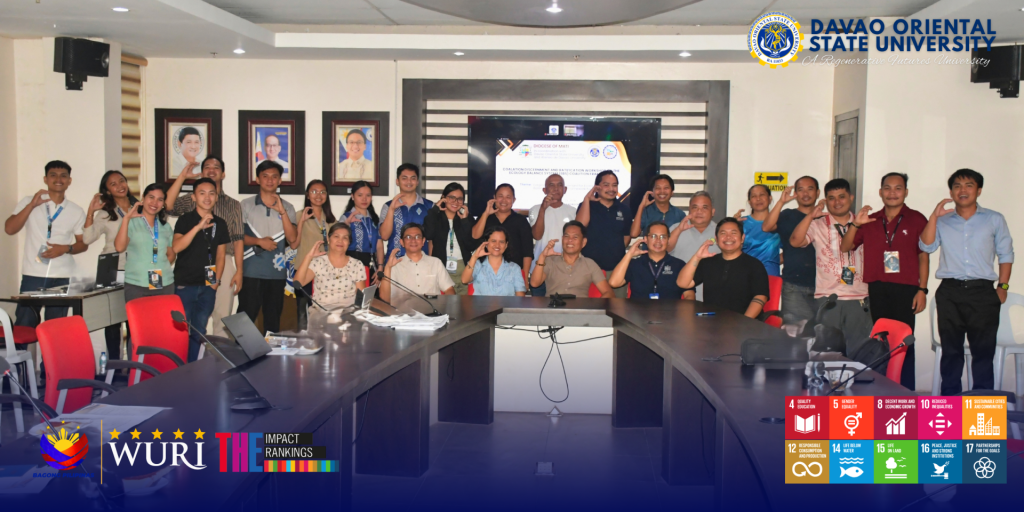
After years of collaboration, Davao Oriental State University (DOrSU), the Diocese of Mati, Ateneo de Davao University (AdDU), and other stakeholders moved to formalize a multisectoral coalition for ecological protection and sustainable development during a ratification workshop on Wednesday, September 23.
The proposed Coalition for Ecosystem-Based Sustainability (COEBS) seeks to bring together government agencies, academic institutions, civil society organizations, people’s organizations, Indigenous communities, faith-based groups, and other sectors to advance ecological protection through research, education, advocacy, and policy.
The Diocese of Mati, under Bishop Abel C. Apigo, DD, initiated the coalition through its fellowship and environmental initiatives, with DOrSU and AdDU involved in its early development. The institutions have since worked with other stakeholders to refine the coalition’s framework and proposed areas of action.
COEBS is envisioned as a multisectoral, rights-based, law-anchored, science-based, and solutions-oriented platform responding to environmental degradation and governance challenges in Davao Oriental and the wider region. Its guiding principles include environmental stewardship, justice and equity, scientific integrity, community empowerment, intergenerational fairness, transparency, cultural sensitivity, and inclusive participation.
During the workshop, participants reviewed the coalition’s shared purpose, guiding principles, roles and responsibilities, decision-making processes, proposed amendments, and next steps toward formal organization and collective action.
Rather than serving as a regulatory body, COEBS is intended to complement existing institutions and initiatives by strengthening public understanding, fostering community ownership, promoting multisectoral cooperation, and facilitating dialogue among communities, government, academe, and other stakeholders.
The coalition also places communities at the center of ecological action. Farmers, fisherfolk, Indigenous peoples, women, youth, and other people’s organizations are identified as key partners in contributing traditional ecological knowledge, undertaking community-based monitoring, supporting conservation and restoration efforts, and developing sustainable livelihood initiatives.
Its proposed programs are organized around four interconnected pillars: Research, Education, Advocacy, and Policy, or REAP. Together, these pillars are intended to provide an integrated approach to ecological protection, community resilience, and sustainable development.
Among the initiatives being considered are community-based environmental research, biodiversity monitoring, environmental education, policy dialogue, forest and watershed restoration, mangrove rehabilitation, sustainable agriculture and fisheries, ecotourism, and community enterprises.
COEBS envisions a sustainable and inclusive Davao Region where ecosystems are balanced, biodiversity is protected, and communities thrive. Its mission is to strengthen ecological balance and sustainability through collaboration in research, education, advocacy, and policy.
Participants also proposed broadening consultations with grassroots sectors, strengthening the coalition’s organizational structure, and pursuing formal registration to establish its legal identity. Capacity development, institutional alignment, monitoring and evaluation, and Securities and Exchange Commission registration were also identified as mechanisms for sustaining the coalition’s work.
The workshop marked another step in the continuing partnership among DOrSU, the Diocese of Mati, AdDU, and other stakeholders toward establishing a shared platform for ecological action across Davao Oriental and the wider Davao Region.