

DOrSU welcomes CMU students, faculty for educational tour
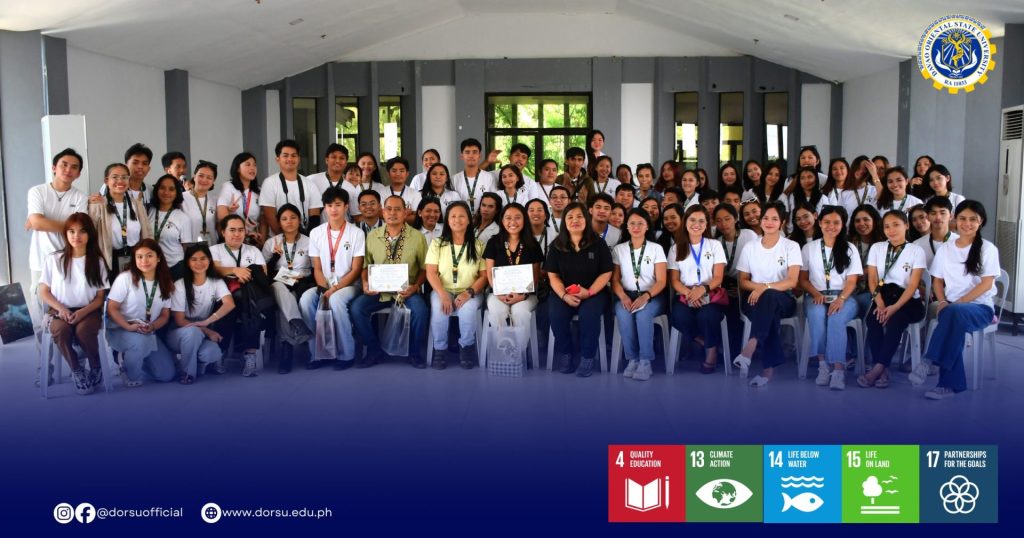
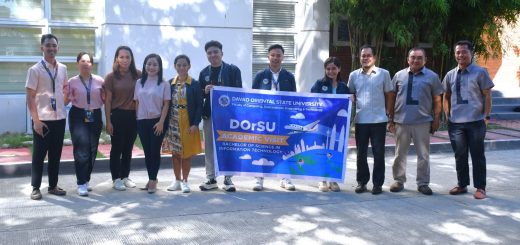
Davao Oriental State University (DOrSU) welcomed another group of students from Central Mindanao University (CMU), along with several faculty members, on March 30, 2026, for an educational tour in the City of Mati, following the first batch’s visit on March 16.
The tour featured an academic session that introduced the visiting group to selected environmental programs and ecosystem restoration efforts in Davao Oriental. Serving as resource speakers were Dr. John Glen P. Seniel, Program Head of the BS Environmental Science program, and Ms. Rheacin A. Polestico, a researcher involved in the university’s coral reef restoration project.
In his discussion, Dr. Seniel presented the importance of the Guang-guang Mangrove Park and Nursery as a site for environmental education and biodiversity conservation. Meanwhile, Ms. Polestico shared information on DOrSU’s coral reef restoration work in Pujada Bay, offering the students a closer look at ongoing initiatives aimed at supporting marine ecosystems.
Following the session, the CMU delegation was brought to DOrSU’s Artificial Coral Reefs Production Facility, established through the university’s partnership with rrreefs, a Switzerland-based socio-ecological impact startup. The tour was facilitated by Lorjie B. Bation, who guided the participants through the facility and provided further context on the project’s contribution to local marine protection efforts.
The group also visited the Guang-guang Mangrove Park and Nursery, where students were able to observe the area’s ecological features and better understand the value of mangroves in sustaining coastal environments. The field exposure complemented the earlier discussions and allowed the participants to connect scientific concepts with actual conservation practices on site.
The visit of CMU’s second batch underscores the continuing academic linkage between CMU and DOrSU, particularly in creating meaningful opportunities for experiential learning. Through lectures and site visits, the activity helped broaden the students’ appreciation of environmental conservation and the practical work being carried out to protect coastal and marine habitats.